Your Growing Cat - the Puberty Stage
21.04.2026 - Reading time: 3 minutes
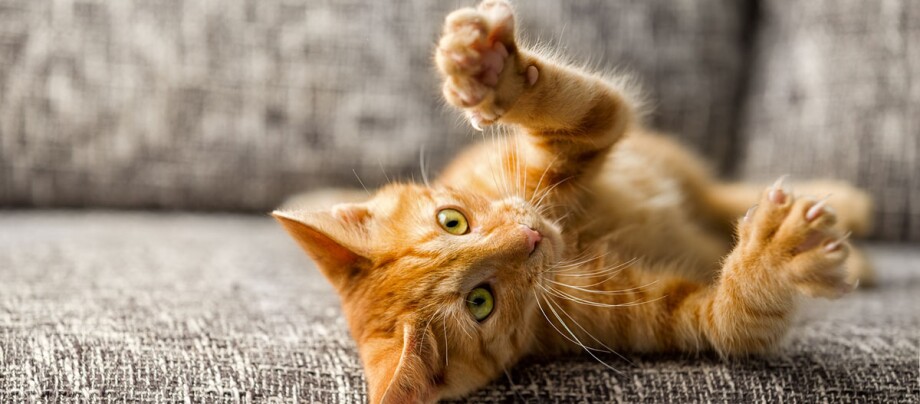
All mammals go through a phase that marks the transition from juvenile to adult: puberty. When this challenging time begins and how long it lasts varies not only from species to species, but also within species depending on the breed and individual. However, it is always accompanied by complex hormonal changes that affect the behaviour of the adolescent animal. Some background information will help you better understand your young house cat.
When Do Cats Reach Puberty?
The bodies of female cats begin producing sex hormones around three months of age and reach sexual maturity between six and nine months. Male cats begin puberty somewhat later, at around five months. Depending on the breed, they are fertile between nine months and their first birthday. Puberty in cats therefore lasts about six months. During this time, the animals’ hormone levels change, which in turn affects their behaviour. Unlike humans, cats do not experience significant physical changes during puberty, such as sudden growth spurts, but they do experience a kind of “voice change”: their voice suddenly sounds more mature.
How Can Help My Cat Through Puberty?
Living with a teenage cat requires patience and understanding above all else. Remember that your pet is going through a phase of impulsive behaviour. Respect its development into an adult animal. Even if your feline friend’s moods, antics, and occasional relapses into kittenish behaviour severely test your patience, stay calm. You can soothe particularly restless cats with cat pheromones or catnip.
A important medical decision is now pending: neutering. Outdoor cats should be neutered in good time not only to prevent unwanted offspring but for their own safety. When a male cat reaches puberty, his macho instincts awaken and in worst-case scenarios, an unneutered male cat, barely out of kittenhood, will set off to fight with other males and seek out females in heat. These animals can quickly travel many kilometres from home, get lost, be hit by a car, or fall victim to other dangers. Furthermore, the risk increases that the outdoor cat will contract feline diseases or be seriously injured in fights.
Spaying is also strongly recommended for female cats: Firstly, it prevents unwanted litters, and secondly, female cats also leave scent markings that male cats can detect from miles away. Furthermore, female cats can go into heat monthly during the summer months – these periods are extremely stressful for the animal. Spaying and neutering cats is a routine procedure for veterinarians performed under general anesthesia.
Do Different Breeds Experience Puberty at Different Times?
Oriental cat breeds such as the Siamese, Sacred Birman, and Abyssinian are considered particularly precocious: females are sometimes capable of giving birth as early as four to five months. Larger breeds such as the Maine Coon and Norwegian Forest Cat, on the other hand, only reach sexual maturity at around one year of age and are not fully grown until three years old. Long-haired cats generally reach sexual maturity later than short-haired breeds.
What Behaviour Can Be Expected During Puberty?
As far as the pubescent behaviour of cats is concerned, it is not so different from the mood and actions of human teenagers.
- Mood Swings: One moment playfully silly, the next staring gloomily out the window? The relaxed cuddle session is abruptly ended with hissing and a swipe of the paw? Adolescent cats are experiencing a rollercoaster of emotions – their mood can change from one moment to the next.
- Listlessness: Neither their favourite food nor a tempting toy sparks your feline friend’s interest? A certain apathy is perfectly normal during feline puberty. However, observe this lethargy closely: If it persists, it could also be a symptom of illness.
- Defiant Behaviour: Does your feline friend pretend to be deaf when you call her, or refuse to stop scratching the sofa? During adolescence, cats may demonstratively ignore their owner’s commands.
- Mischief and Vandalism: If your young cat comes up with the strangest ideas, plays pranks, and even causes minor damage, they’re not intentionally looking for trouble. Take the mess in the apartment with humour.
- Grandiosity: Some cats develop a particular recklessness during puberty: This can manifest itself in death-defying climbing expeditions as well as in the provocation of stronger members of their species.
- Testing Boundaries: Does your feline friend know perfectly well that they’re not allowed to steal the sausage from the breakfast table, but keeps trying? When a bad habit that was previously broken suddenly reappears, the cat is testing how far they can go. Set clear limits for your little rascal but try to be patient.
- Heat: With the awakening of their sexual drive, cats begin to exhibit behaviours that signal their first sexual encounters. They roll around on the floor, meowing loudly and enticingly, and can become affectionate and cuddly to the point of being intrusive.
- Marking (males only): They spray urine containing special pheromones (which smell unpleasant to humans) to mark their territory, warn rivals, and attract females.
- Gender Roles: Surprisingly, cats develop gender-specific behaviours during puberty: While female cats are usually more interested in objects and, for example, particularly enjoy playing with toy mice, male cats become adventurous and love to romp and roughhouse.