Nutrition for Kittens
21.04.2026 - Reading time: 4 minutes
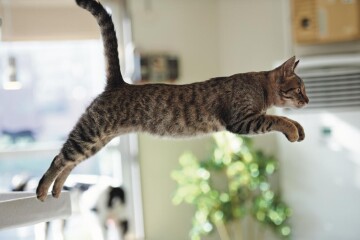
Kittens exploring the world are constantly on the move – and consequently have a high energy expenditure and are always ravenously hungry. As long as their mother's milk is available, a kitten will satisfy its appetite there at regular intervals.
Different Stages of A Kitten's Diet
In the first weeks and months of life, providing a kitten with precisely the right food is essential. Under adverse circumstances, you need to start even earlier: If the mother cat has too little milk or you have to care for orphaned kittens, use special kitten milk replacer.
Between the fourth and eighth week of life, the kittens gradually transition from milk to solid food. They begin to show interest in their mother’s food bowl and for a while alternate between milk and solid food, while the mother’s milk supply slowly decreases.
Around eight to ten weeks of age, the kitten can be completely switched to cat food. Start by offering it high-quality junior complete food. Retailers offer a wide range of such special baby food.
It’s only around twelve months of age that a kitten is fully grown enough to gradually transition from kitten food to adult food. Do not feed your kitten adult food before then – as explained below, this can lead to severe malnutrition. Allow yourself plenty of time for the food transition. During the critical period for food socialization (approximately 3 to 6 months of age), kittens are offered many different brands and forms of food. Generally, kittens tolerate this well, but digestive problems can occur. If this happens, you shouldn’t suddenly change the type of food, but rather stick with the current food to allow the kitten’s digestion to settle down. If there is no improvement after two days, you should switch to a food that has been well-tolerated in the past. If your kitten is suffering from persistent diarrhoea, you should consult your veterinarian immediately.
Overview
- Weeks 4-8: Gradual transition between milk and solid food
- Weeks 8-10: Complete transition to cat food
- Approximately 12 months: Transition from kitten to adult food
The first phase of a kitten’s life consists primarily of two things: exploring the world and growing. The little feline’s body is working incredibly hard: within just a few months, a tiny, helpless creature transforms into an energetic, agile being that keeps everyone on their toes. Its body weight multiplies , and its playful toddling evolves into breathtaking fitness and athletic feats. All of this can only develop healthily if the kitten receives food that contains all the essential nutrients in an age-appropriate ratio. A kitten has roughly twice the energy requirements of an adult cat; kitten food therefore has correspondingly higher nutritional values.
A kitten’s small stomach is designed for smaller portions of food; there simply isn’t enough room for an “adult portion.” Therefore, the animal needs many small meals, evenly distributed throughout the day. Kitten food should contain highly digestible proteins; such food accommodates the kitten’s rapid metabolism and allows for the absorption of as many amino acids as possible. Since kittens can only eat small amounts at a time, but their energy requirements are very high, you should ensure that the kitten food is particularly energy-dense. From the beginning, the kitten should also have access to dry food in a carefully defined quantity: crunching the hard kibble strengthens the jaw muscles and helps prevent tartar buildup. Make sure fresh water is always available. If kittens are fed exclusively wet food during their first few weeks of life, their jaw development can be weakened.
A Good Kitten Food Contains, In The Appropriate Dosage:
- Main nutrients: high-quality animal protein and fatty acids (Omega 3 and 6)
- Macro- and trace elements (including calcium, selenium, magnesium)
- Amino acids (including taurine, arginine)
- Vitamins
How Can My Kitten Learn To Eat From A Bowl?
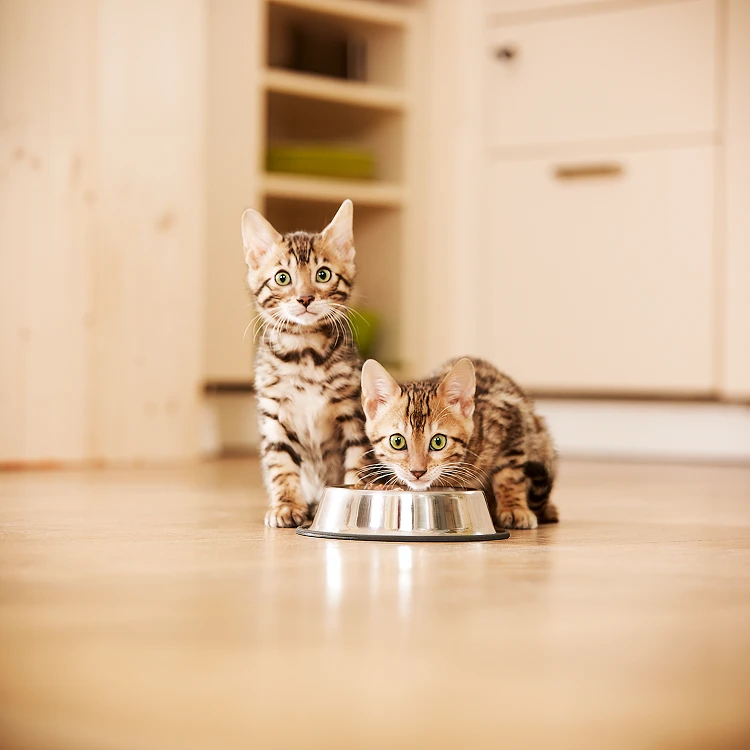
Kittens learn to eat from a bowl by observing and imitating their mother. But just as human babies initially struggle to transition from a bottle to a plate and cutlery, the bowl can confuse many kittens at first. There’s a simple reason for this: as long as the kitten is nursing or bottle-feeding, the food source is horizontal in front of its mouth – or slightly elevated above it. To eat from the bowl, however, the kitten must lower its head and lift the food kibble. This takes practice and requires some coordination. If you have to raise a kitten without its mother’s assistance, a trick and a little patience are needed. Put some cat food on a spoon and hold it in front of the kitten’s face so it can eat from the spoon at nose level. If this works, gradually lower the spoon until the animal has internalized eating “from below” and uses the bowl on its own.