Outdoor Cats
21.04.2026 - Reading time: 5 minutes
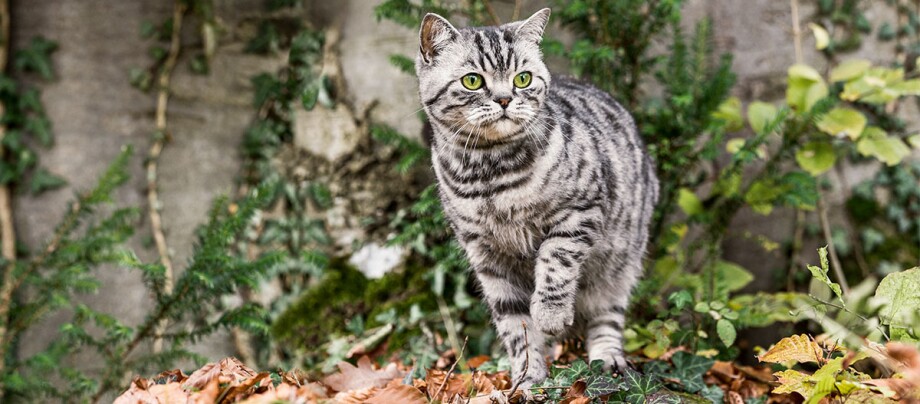
Cats are remarkably adaptable animals that can live happily indoors, provided all their needs are met. However, allowing cats to roam freely is also a common practice. Free-roaming cats, however, often spark debate. Read on to learn what you should know about letting cats roam freely.
What To Consider When Allowing Your Cat To Roam Free
Allowing a house cat to roam freely suits its natural instincts: stalking, lurking, hunting, but also social interaction with neighbouring cats and stimulation from a variety of external stimuli and smells challenge the animal. Outdoor cats are considered more balanced and robust than indoor cats. However, whether an outdoor lifestyle is suitable for your cat depends on the specific circumstances.
The most important thing to consider when allowing your cat to roam freely is, of course, local safety: If you live in a traffic-calmed zone directly adjacent to a park, letting your cat roam freely is safer than living in the immediate vicinity of a busy highway. In rural areas, however, free-roaming cats face additional dangers such as wild animals or farmers protecting their livestock.
In more urban areas you should consider the neighbours: When a cat leaves the house, it doesn’t stay on its” humans’ property – walls and fences are no obstacle for it. It’s important to be aware that you could be liable for any mischief your cat gets up to in the neighbourhood – for example, if your cat fishes valuable koi out of a garden pond or scratches a neighbour’s car.
Prepare Your Cat For Adventure
- Vaccinations: Outdoor cats have frequent and uncontrollable contact with other cats. Vaccination against feline panleukopenia, feline herpesvirus, rabies, feline infectious peritonitis (FIP), and feline leukemia is strongly recommended.
- Risk of Infection: If your cat suffers from a transmissible disease such as FIV, it should not be allowed to roam freely so that it cannot infect other cats.
- Parasite Protection: Ensure adequate protection against parasites such as fleas and ticks; also remember regular deworming treatments.
- Grooming: Outdoor cats, especially breeds with longer fur, require more assistance with grooming. All sorts of foreign objects and dirt can become stubbornly trapped in their fur.
- Neutering: As a responsible pet owner, outdoor cats should absolutely be neutered. This prevents unwanted offspring. Another major advantage: Neutered animals don’t stray too far from home and are less prone to fights.
- Microchip: Have your cat microchipped and registered. If the animal gets lost for any reason and is found elsewhere, the owner can be identified immediately through registration.
- Consideration for other animals: During the breeding season of songbirds, you should temporarily confine a particularly hunting-minded cat to the house: Nestlings are easy prey for cats.
Your cat shouldn’t be allowed outside until at least a month into its new home, for example, after an adoption or a move. This helps it learn where its “safe haven” is. During its first explorations, leave the door slightly open so the cat can easily slip back inside if it gets too scared outside. Initially, feed it a little less than usual in the morning. This will motivate it to return to its full bowl in the evening. Cats should generally stay indoors at night. You can use the evening feeding as a recall signal: always feed at the same time and call the cat, perhaps accompanied by a clearly audible noise, like a tin can of dry food. It won’t be long before your clever cat knows when dinner is served – and from then on, it will appear at its bowl on time.
How Can I Get My Cat Used To Their Pet Door?
Allowing your cat to roam freely can present an organisational challenge: The cat will regularly sit in front of or behind the door, insistently demanding to be let in or out. A good solution is to install a cat flap, a door within the door, through which the cat can enter and leave the house as it pleases. A variety of cat flaps are available, most of which are easy to install. For glass doors (for example, on the patio), the assistance of a glazier is required. Modern cat flaps offer a variety of practical additional functions. For instance, you can prevent “unauthorised” cats from entering the house by setting the door to open only for your cat – access is granted using the same microchip that is used for identification. Time-based programming functions ensure that the cat flap only opens at specific times or that access is restricted to entering the house, but not exiting.
Using a cat flap requires some initial training. To help your cat understand what the door is for, first fix the flap in the open position and then try to lure your cat through the opening. A toy or treat can serve as an incentive for your pet to try out this unfamiliar gateway. Be patient – cats are often wary of new things. Praise and reward successes, and then gradually try closing the cat flap a little further. Your feline friend will soon figure it out!
Tips On How To Get Your Cat Used To Going Outside
Tip 1: It’s best to install a cat flap before your cat goes outside for the first time. This way, they can always come back in. Choose a slightly rainy day for their first outing. Give them a little less food than usual, and they’ll come back on their own. The first time, go out calmly with your cat and show them the nice spots in the garden. Go slowly and see how far they feel comfortable going.
Tip 2: Let your feline friend explore the surroundings in peace; don’t constantly call its name. The cat doesn’t want to be distracted. Give it plenty of time – soon it will naturally want to come back inside. If you greet the cat with its favourite food or toy after its first outing, it will realise that coming home is worthwhile.
Tip 3: Cats are territorial animals. After a move, your feline friend needs time to adjust to their new home. Keep them indoors for at least four weeks. This ensures that the cat recognises the new surroundings as the centre of their territory.
Tip 4: An outdoor cat is more active than a more relaxed indoor cat and therefore burns more calories. Even if they have plenty of opportunities to supplement their diet with freshly caught mice, they need energy-rich food with a high meat content.