Teething In Cats
21.04.2026 - Reading time: 4 minutes
Cats are predators and, as such, rely on strong teeth. Even if your feline friend doesn't have to hunt for its food, healthy teeth are essential for its overall well-being, as a poorly developed set of teeth can lead to various health problems. Therefore, it's crucial to monitor the condition of your cat's teeth from a very young age. Read on to learn about the process of a cat's teeth changing and how to check their teeth.
At What Age Do Cats Start To Change Their Teeth?
Cats go through three phases in their lives that are related to the development of their teeth. The first two phases occur during kittenhood – the jaw and teeth change radically within just a few months.
These are the stages in which teeth are replaced:
- Milk teeth: At birth , a kitten is completely toothless. Milk milk teeth are already present and emerge around the second and third week of life. The incisors and canines come first, followed by the molars about seven days later. By the time the kitten is eight weeks old, the milk teeth are usually complete. Around this time, the transition to solid cat food takes place .
- Adult teeth: Kittens don’t use their milk teeth for very long, as they are replaced by permanent teeth between four and six months of age. As the kitten grows, the proportions of its skull and jaw change – from a rounded to a more pronounced head shape. During this process, several new teeth grow to form the adult set. The duration of this teething process varies from cat to cat and depends on the breed. The milk teeth don’t fall out all at once; the process takes place over several weeks. As a general rule, a cat’s teething should be complete by the seventh month of life.
- Age-related Tooth Loss: Even senior cats with healthy teeth can experience natural tooth loss with age. Cats kept as pets usually have no problem compensating for this. Much more frequently, tooth loss is caused by diseases of the mouth and throat, gingivitis, or tartar buildup. Good dental care and regular preventative treatments are therefore important for adult cats.
What Happens When A Cat's Teeth Change?
A kitten’s teeth initially consist of 26, while the adult set has a total of 30 teeth – including four additional molars. The process of teething is initiated by an organic process in which the roots of the milk teeth are resorbed by the body. These then become loose and are pushed out by the emerging adult teeth. You might be lucky enough to find a milk tooth as a keepsake. However, since milk teeth are often swallowed unnoticed, you, as the owner of a kitten, might not even realise the moment of teething. After teething, you should switch your cat’s diet from kitten food to adult food.
What Problems Can Occur During A Kitten's Teething Process?
Normally, a cat’s teething process is uncomplicated. However, it can sometimes affect the animal’s behaviour or – in rare cases – require veterinary assistance.
Problems during teething:
- Persistent milk teeth: A milk tooth that doesn’t fall out naturally hinders the growth of the permanent teeth and promotes malocclusion. This can lead to “double teeth,” where a milk tooth and a permanent tooth grow side by side in the jaw. In cats, this is particularly noticeable in the canine teeth. In such cases, the milk tooth should be extracted by a veterinarian.
- Missing permanent tooth: Occasionally, a baby tooth fails to fall out. This can have two causes: Either the tooth root hasn’t receded and the baby tooth is blocking the growth of the permanent tooth, or, due to genetics, no permanent tooth is waiting to beneath a baby tooth. Before extraction, this should be clarified with an X-ray, as the baby tooth must then be preserved.
- Fever: Some kittens develop an elevated temperature and show a general decline in health during teething. To rule out any underlying issues beyond teething, a veterinary check-up is recommended if there is any doubt.
What Can I Do If My Cat Is Teething?
As an attentive observer, you can recognise that your kitten is teething by increased salivation, tilting its head, and licking its gums. Some kittens rub their muzzles particularly noticeably against objects or their owner. Sometimes you might notice that they eat more slowly. The kitten may also exhibit moodiness due to the sensation of a foreign object. Occasionally, noticeable bad breath occurs, resulting from the loss of the milk tooth. You can take a few steps to make teething easier for your kitten.
Measures to Facilitate the Shedding of Baby Teeth:
- Inflammation: Special treats are available in pet stores that have an antiseptic effect and can alleviate gum irritation and minor infections.
- Feeding: Offer the kitten soft food that it can easily chew and digest. Simultaneously giving some dry food or crunchy treats will help loosen any wobbly teeth.
- Chew Toys: Specific teething toys for cars are less common. However, it’s helpful if the kitten has the opportunity to chew on designated objects of varying hardness.
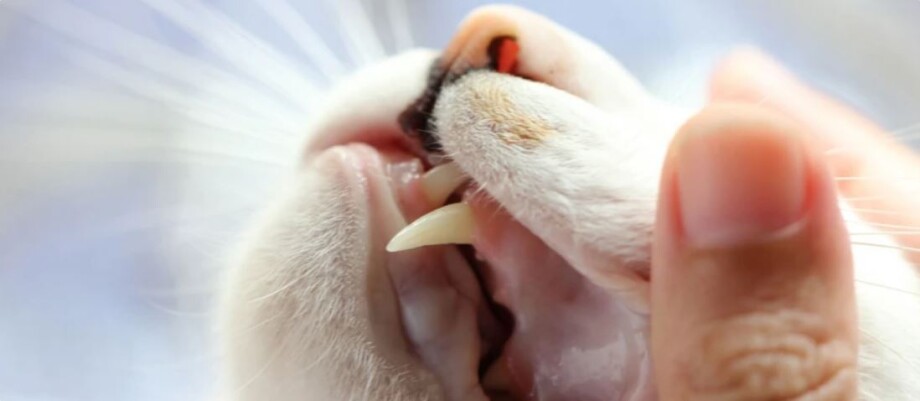
- Gum Massage: Kittens who aren’t afraid of being touched and allow their human to handle them enjoy a gentle gum massage. This is also a good opportunity to check the progress of their teething. Get your kitten used to this playfully by casually stroking their lips while cuddling them, gently lifting them, and then touching their gums with your fingertip. Once the kitten is accustomed to this physical contact, it will make future oral health treatments easier for you (and the vet).
Carefully accompany your kitten through the teething process and ensure good dental hygiene so that it can still bite powerfully even as a senior cat.