Feeding wild birds correctly in Winter
09.10.2026 - Reading time: 3 minutes
Artush / iStock via Getty Images
Wild birds struggle to find food, especially in Winter. With the right food, you can help them get through the cold season.
Which bird food is particularly important in winter, and what specific considerations apply regarding the different bird species?
What is high-fat feed and why is it so important?
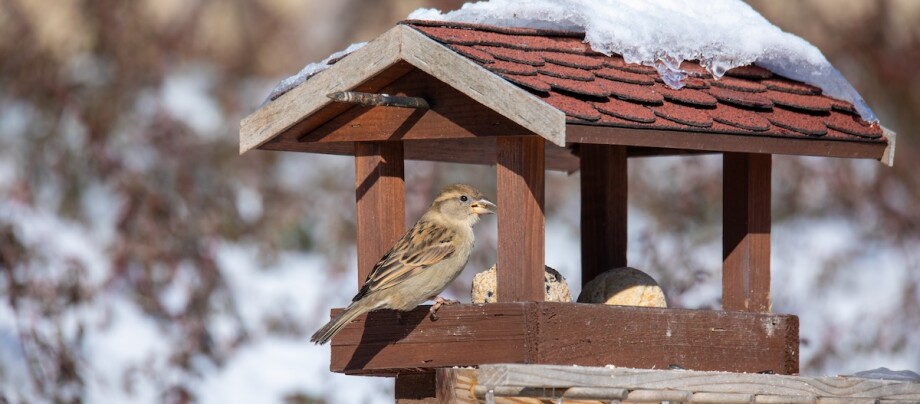
High-fat feed provides a significant energy boost during winter for birds such as tits and tree sparrows. You can buy ready-made fat balls and fatty loose seed mixes—suitable for hanging up or using in feeders and bird tables—at retail stores. If you prefer to make your own high-fat feed, simply heat a mixture of suet, rolled oats, berries, and wheat bran. Shape the mixture into balls or pour it into a flowerpot. Inserting a twig through the drainage hole creates a perch, making it easier for the birds to feed. Our step-by-step guide to making your own fat balls shows you how to prepare suitable food for tits and shape it in a bird-friendly way. Hang the food in the shade so it doesn’t melt in the sun. Read more about year-round bird feeding here.
Mieszko9 / iStock / Getty Images Plus via Getty Images
Which seed mixes are suitable for Winter?
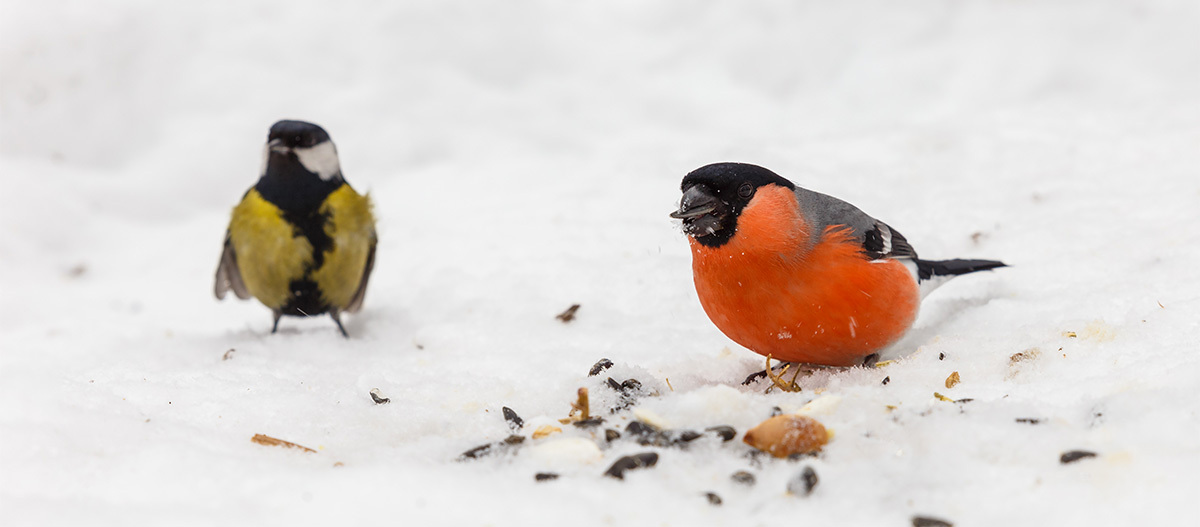
Their strong beaks make birds like chaffinches and bullfinches true seed-eaters. They enjoy a seed mix containing sunflower seeds, hemp seeds, and rolled oats. Chopped nuts and nut fragments provide plenty of energy due to their high fat content, but they must be fed in their natural state—unprocessed and unseasoned. Grains, flaxseeds, and poppy seeds are also suitable options. Seed-eating birds particularly enjoy visiting birdhouses or feeders. Clean the birdhouse regularly to ensure the food stays fresh and hygienic. Want to build your own birdhouse? Click here for instructions!
Soft feed for cold days
Thrushes, robins, and blackbirds are among the birds that prefer to forage near the ground. Suitable soft foods you can offer them include apples, raisins, rolled oats, or bran. Place the food in special feeding tubes; if scattered directly on the ground, it can spoil and attract rats. Never feed them breadcrumbs, as bread expands uncomfortably in a bird’s stomach.
If you set up a bird feeder, you must keep it filled regularly, as wild birds quickly come to rely on this food source.
Also, use the winter season to put up nesting boxes. They should be mounted on trees or house walls at a height of just over two meters, safely out of reach of predators. The ideal orientation for the entrance hole is east or southeast.
What you should keep in mind regarding Winter feeding
- Do not feed kitchen scraps—salted foods are dangerous for wild birds.
- Use high-quality feed and mix different varieties to offer something suitable for every bird species.
- Avoid large feeding stations, as diseases spread quickly there.
- Set up multiple feeders and smaller birdhouses, and fill them in rotation.
- Clean the ground around feeding and watering spots daily.
- Remember to provide fresh water for the birds every day.
Fun fact: Why don't wild birds get cold feet?
They are well-equipped for the cold: while their core body temperature is around 40 degrees Celsius, the temperature drops lower further down—measuring about five degrees in the lower leg and potentially falling below one degree Celsius at the soles of the feet. Heat exchange occurs within the legs, allowing cold blood returning from the feet to warm up before entering the body, while warm blood from the body cools down before reaching the feet. In short, wild birds don’t get cold feet because their feet are already cold.
Other strategies for coping with the cold include tucking in the head and fluffing up their feathers; there is a reason the robin looks like a little ball in winter. The great spotted woodpecker has adapted by occasionally pecking out a hollow in the thermal insulation of building facades. Nest boxes and tree hollows are also popular choices for roosting. On a cold night, wild birds can lose up to ten percent of their body weight just to keep warm.