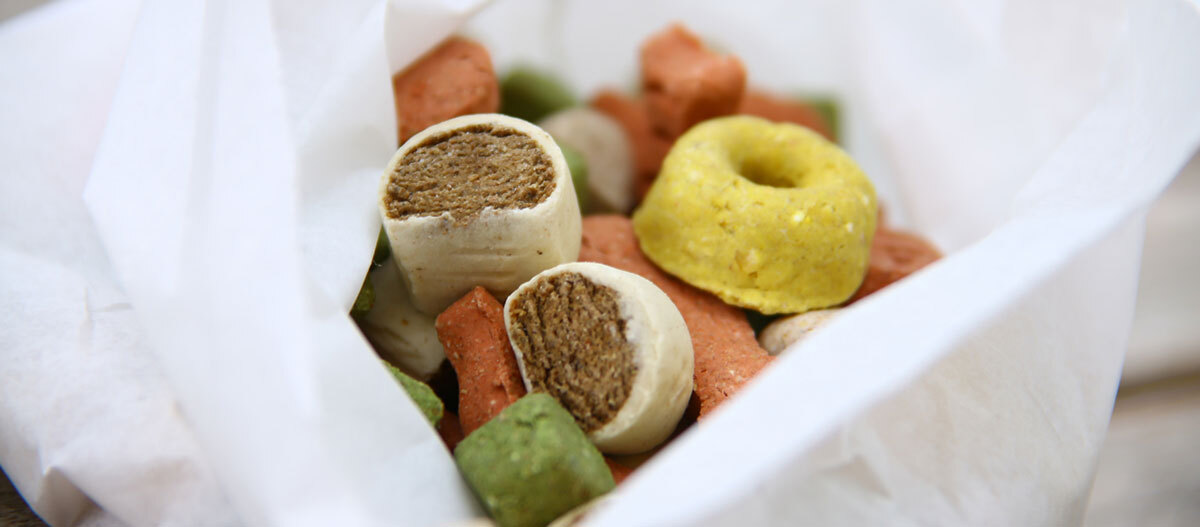
Good dog food – only the best in the bowl
16.06.2026 - Reading time: 9 minutes

Tierney/stock.adobe.com
If you are looking for new food for your four-legged friend, you might initially feel overwhelmed when faced with so much choice. The selection is vast, and every manufacturer promises nothing but the best for your dog. Ingredients and nutritional analysis, in particular, can be confusing so here you will find advice and learn what distinguishes high-quality dog food.
What makes good dog food?
An expensive product is not automatically a good food, and an inexpensive one is not necessarily bad. High-quality dog food contains ingredients that provide the dog with all essential nutrients. You often only discover whether a food suits your dog after you actually start feeding it. Indicators that the food and its composition are right for your dog include a comparatively low intake requirement and a small volume of stool. Flatulence should not be a regular occurrence, and the stool itself should be firm and well-formed. A shiny, odor-free coat and an overall agile, alert dog are also signs that the chosen food is a good choice.
What kinds of dog food are available?
There are various ways to feed your dog. Which method you choose depends largely on your preferences and, of course, your dog’s taste. If your dog is a picky eater, there is no reason not to switch foods. The following feeding methods are available:
- Canned food/wet food
- Dry food
- BARF/raw feeding/home-cooked food
- Semi-moist food
You can also combine different feeding methods—for example, dry food in the morning and wet food in the evening. However, dry and wet food should not be mixed together in the same bowl at the same time.
What's in good food?
Good dog food meets your dog’s nutritional needs. However, these needs change over the course of a dog’s life. A puppy has very different nutritional requirements than a senior dog. Highly active dogs that compete in dog sports or work with livestock need more energy than a “couch potato.” Sick dogs and those with food sensitivities require a different diet than healthy animals. This means you must always tailor the food to your dog. For puppies, for example, it is advisable to buy special puppy food, as young dogs have a very high need for high-quality protein and levels of vitamins and minerals specifically balanced for growth.
Good to know:
There are complete feeds, single-ingredient feeds, and complementary feeds. While a complete feed is a dog food with the right composition to meet your pet’s nutritional needs, you must personally ensure a balanced diet for your dog when using single-ingredient or complementary feeds. Single-ingredient feeds contain only one component—for example, horse muscle meat. Complementary feeds are intended to supplement your dog’s regular diet and, according to feed regulations, consist of at least two components, such as horse meat with vegetables.

jirkaejc/iStock / Getty Images Plus via Getty Images
Composition of good dog food
Fundamentally, the quality of dog food depends on the quality of its base ingredients. The food should be highly nutritious and free from harmful substances and environmental toxins. Good dog food contains the following components:
- Meat: Meat is the primary source of protein for your dog. It should make up 50 to 70 percent of the food. A large proportion of the meat should be muscle meat, supplemented by organ meats and bones. These also provide essential nutrients: liver supplies vitamin A, tripe provides protein, and bone meal offers calcium.
- Fruit/Vegetables: Plant-based ingredients provide your dog with crude fiber, energy, and vitamins; they should account for around 20 percent of the food.
- Oils and fats: Oils and fats are excellent sources of energy and supply your dog with essential fatty acids. Ideally, these oils and fats should be of high quality.
- Carbohydrates: Carbohydrates also provide energy for your dog. They can come from grains or pseudo-cereals such as rice, millet, or buckwheat. If your dog has a grain allergy, it is best to choose grain-free dog food that uses sources like potatoes or sweet potatoes for carbohydrates.
Open or closed declaration?
Manufacturers list the composition of the dog food on the packaging, choosing between either a closed or an open declaration. In general, ingredients must be listed in descending order of quantity; the higher the content of a specific ingredient, the earlier it appears in the list. With a closed declaration, ingredients are grouped together rather than listed individually; for instance, the label might state “meat and animal derivatives,” while plant-based ingredients are grouped as “cereals and plant derivatives.” An open declaration, by contrast, specifies the individual components—such as chicken meat, rice, or chicken fat.
Open labeling offers the advantage of clearly showing exactly which ingredients are in the food. For instance, the packaging or product description might list: 60% chicken (hearts, 15% muscle meat, liver, gizzards, necks, fat), 7% potatoes, 1% minerals, and 0.5% linseed oil.
This generally provides reassurance and can be a significant benefit for dogs with allergies or intolerances. However, even with open labeling, trace amounts of other substances may still be present. Open labeling is voluntary, meaning the manufacturer ultimately decides what to include on the label. Such labeling is often done for marketing purposes—for example, when tiny, negligible amounts of specific herbs or “superfoods” are included in the dog food.
Closed labeling reveals less information, as it does not specify exactly which ingredients the manufacturer has used. However, it makes it easier to gauge the meat content: if “meat and animal derivatives” appear first on the list, they constitute the largest portion of the product. This description does not indicate the specific ratio of muscle meat to slaughter by-products. In principle, there is nothing wrong with slaughter by-products like offal, as they also provide the dog with essential vitamins and minerals. Closed labeling provides no insight into the overall quality of the food or the grade of the ingredients. From a consumer perspective, closed labeling is unsatisfactory because it deprives customers of the ability to decide for themselves what goes into their dog’s bowl. Furthermore, manufacturers can alter the recipe without having to explicitly declare the changes.
Some manufacturers opt for “semi-open” labeling, providing detailed information on only specific components of the dog food.
Feed content analysis
Feed analysis provides another indicator of dog food quality. Every manufacturer is required to list the food’s analysis on the packaging. The values provided include crude protein, which represents all nitrogen-containing compounds and thus serves as a rough measure of the total protein content. Unfortunately, feed analysis reveals nothing about protein digestibility. Dogs are particularly efficient at utilizing animal proteins. Therefore, it is beneficial if the manufacturer specifies what proportion of the crude protein is of animal origin.
In addition to protein content, the following values are declared as analytical constituents: fat content, crude ash, crude fiber, moisture, calcium, and phosphorus.
The stated values refer to the proportion within the fresh matter. Here is what the individual analytical constituents tell us about good dog food:
Crude protein: Proteins are the primary source of energy for our dogs. This value indicates the quantity present but says nothing about the quality of the proteins themselves. You can use the following figures as a general guideline:
Wet food | Dry food | |
|---|---|---|
Adult dog | 4.5 to 6.5 percent | 18 to 25 percent |
Puppy up to 14 weeks old | 6.5 to 9 percent | 25 to 37 percent |
Puppy over 14 weeks old | 5.5 to 8 percent | 21 to 31 percent |
- Crude fat: Fats can be of animal or plant origin. As a guideline, levels should exceed 1 percent in wet food and 5 percent in dry food.
- Crude fiber: This term refers to indigestible plant matter. It stimulates the dog’s gut and supports digestion. However, excessive crude fiber can lead to flatulence and large stool volumes. Reference values are a maximum of 2 to 3 percent for dry food and 0.5 percent for wet food.
- Crude ash: To determine this value, the food is burned at 550 degrees. Crude ash represents the residue left behind—specifically, inorganic substances such as trace elements and minerals. Excessively high crude ash content is difficult for your dog to metabolize. Values should remain below 10 percent for dry food and below 2 percent for wet food.
- Calcium and phosphorus: Calcium is essential for the mineralization of bones and teeth. It is also found within cells, where it plays a role in blood clotting and cell stabilization.
- Calcium is further important for nerve and muscle signal transmission. Phosphorus is likewise vital for a dog’s bone structure and healthy teeth; it is involved in various metabolic processes and influences the acid-base balance. To ensure adequate intake of both minerals, you must pay attention to the calcium-to-phosphorus ratio. This ratio should be 1.6:1 for puppies up to six months of age and 1.3:1 for older dogs.
- Nutritional analysis provides only an initial indication and reveals information solely regarding the quantitative composition of the dog food. The food’s actual tolerability and quality for an individual dog can only be determined through practical experience.
Ingredients in good dog food
A complete dog food should provide your dog with all the nutrients it needs. Therefore, the following ingredients should be listed for a high-quality dog food:
- Muscle meat, ideally specifying the animal species used
- Offal such as liver, or the addition of essential vitamins A and B
- Fish, cod liver oil, or the addition of vitamin D
- Algae or the addition of iodine
- Calcium and a calcium source; specification of phosphorus content or the calcium-to-phosphorus ratio
- Trace elements such as manganese, zinc, selenium, iron, copper, and cobalt
- Unsaturated fatty acids and high-quality oils
- Addition of other vitamins, such as vitamin E, and macrominerals like magnesium
These ingredients should not be found in dog food.
While certain ingredients indicate high-quality dog food, there are others you would be better off not finding in the food. These include:
- Colorants, flavorings, and flavor enhancers
- Added sugars such as molasses, lactose, glucose, dextrose, maltodextrin, and inulin
- Plant-based by-products such as beet pulp
Tips for Choosing Dog Food
Commercially available dog food provides everything a dog needs for a healthy life through its composition. If you want to know exactly what is in the food, you should opt for varieties that clearly list their ingredients. Analyzing the nutritional composition allows you to better tailor your choice to your dog’s specific needs. Varieties high in crude protein and crude fat are suitable for very agile, active dogs that are of normal weight or lean. Older, very sedentary, or overweight dogs benefit from varieties with more moderate protein and fat levels.
Conclusion: Good dog food is often a matter of taste.
High-quality ingredients, the right balance of components, and the absence of questionable additives define good dog food. The specific analytical constituents provide clues regarding the food’s quality. Ultimately, what matters most is that the dog is agile and full of vitality, has a shiny coat, and digests the food well—resulting in a relatively low volume of stool. For you as a dog owner, subjective factors also play a role—such as whether the manufacturer is well-regarded and appears trustworthy. However, your dog will always make the final decision on whether the food is good; after all, the best dog food is the one that the dog enjoys eating and tolerates well.