Guinea pigs in the heat: Cool summer fun and relief for guinea pigs
23.07.2026 - Reading time: 7 minutes
Summer is finally here! You may have been waiting a long time for your guinea pigs to move into their outdoor enclosure for the season. However, peak summer temperatures can quickly become too much for them. How much heat can guinea pigs tolerate, and how can you ensure they stay comfortable during the summer? In this guide, we reveal how to protect your guinea pigs from the summer heat and share our best tips for keeping things cool and fun in the outdoor enclosure.
- How much heat can your guinea pigs tolerate?
- How do guinea pigs regulate their body temperature?
- Can guinea pigs suffer from heatstroke?
- What to do if your guinea pig suffers heatstroke
- How can you protect your guinea pigs from the summer heat?
- Why is hygiene so important for guinea pigs in the heat?
- How can you help your guinea pigs cool down in the summer?
- Outdoor fun for guinea pigs: enrichment and cooling off in summer for guinea pigs in an outdoor enclosure
How much heat can your guinea pigs tolerate?
Guinea pigs are most comfortable at temperatures between 18 and 22 degrees Celsius. If the temperature rises by just a few degrees to over 25 degrees Celsius, guinea pigs begin to suffer from heat stress. Pregnant, elderly, or overweight rodents are particularly vulnerable to the heat. Heat stress places a strain primarily on the animals’ cardiovascular system. If you do not ensure they cool down in time, your pets can overheat, leading to life-threatening consequences. But why do guinea pigs overheat so easily?
How do guinea pigs regulate their body temperature?
Guinea pigs overheat easily because they cannot sweat; they lack sweat glands. Nor do they have other cooling mechanisms at their disposal, such as panting or licking their fur. In fact, that very fur works against them: in the wild, it protects them from cold nights in the high Andes. When temperatures rise there, the animals retreat to their burrows and wait for it to cool down. However, their fur is far too dense and warm for our summer temperatures. Generally speaking, guinea pigs cope better with low temperatures than with high ones.
Can guinea pigs suffer from heatstroke?
If guinea pigs are exposed to direct sunlight or trapped heat—such as in a hot vehicle—these sensitive animals can suffer heatstroke. You can recognize heatstroke in your guinea pig by a pulse that is very rapid and barely perceptible. The animal lies listlessly on its side, breathing rapidly and shallowly, with visible flank movement. Immediate action is required.
Das ist zu tun, wenn den Meerschweinchen einen Hitzschlag erleidet
- Wickle den Körper (nicht den Kopf) deines Meerschweinchen in ein kühles, leicht feuchtes Tuch.
- Gib ihm kühles Wasser zu trinken.
- Falls es kein Wasser annimmt, kannst du mit einer Spritze ohne Nadel eine kleine Menge Wasser seitlich ins Maul eingeben.
- Halte ausschließlich die Füße deines Meerschweinchens in kühles Wasser.
- Suche auf schnellstem Weg tierärztliche Hilfe!
- Ein unbehandelter Hitzschlag endet fast immer tödlich!
In der Tierarztpraxis bekommt dein Meerschweinchen Infusionen und gegebenenfalls kreislaufstabilisierende Medikament.
How can you protect your guinea pigs from the summer heat?
Whether your guinea pigs have a permanent outdoor enclosure or a portable run in the garden, you must always ensure the enclosure offers reliable shade at all times of day. This applies even if you keep your guinea pigs indoors; an attic apartment that heats up significantly in summer or an indoor enclosure placed in direct sunlight poses just as much danger to your animals. In addition to roofs, parasols, and shade sails, plants can also provide shade. When selecting plants, simply make sure they are safe for your guinea pigs. Hazel, blueberry, and currant bushes make ideal sources of shade in a large outdoor enclosure. Your guinea pigs are unlikely to be interested in the fruit, but they will happily nibble on and play with the leaves and branches. You can protect young bushes with wire mesh to prevent the animals from gnawing them down completely. Small houses, shelters, wicker tunnels, and other hideaways also provide shady retreats—especially if they are constructed from cooling stone slabs. How about a guinea pig cave made of natural stone, for instance? It gives your pets a hiding place, a climbing feature, and a shady spot all in one.
Avoid Drafts
Although guinea pigs are comfortable in cool temperatures, they do not tolerate drafts well. Drafts can lead to colds, respiratory issues, and conjunctivitis. The ideal location for an outdoor enclosure is cool and shady but sheltered from the wind. Fans are also unsuitable for cooling your pets: while the airflow creates a pleasant cooling sensation for us by blowing heat away from our skin, it does not penetrate a guinea pig’s fur, nor can a fan lower the ambient temperature. In fact, there is a risk that your guinea pigs’ eyes and mucous membranes could dry out, and that the constant airflow could cause them to catch a cold, even on hot days.
Why is hygiene so important for guinea pigs in the heat?
In summer, you also need to protect your guinea pigs from germs and bacteria. These multiply more rapidly in the heat, making meticulous hygiene essential when temperatures are high. Empty and clean their litter trays twice a day, clean the enclosure several times a week, and make sure to check daily for signs of diarrhea or injuries. In hot weather, flies can land on open wounds or an anal area soiled with feces to lay their eggs, potentially triggering the dreaded condition known as myiasis (flystrike). You can spot an infestation by the small, white, oval eggs deposited near the anus or in open wounds. Within just a few hours, the maggots hatch and burrow into the tissue, causing injuries that can even affect internal organs; internal bleeding and infections may also occur. Overcrowding and a dirty enclosure act like a magnet for flies. Older, frail, or overweight animals—which may be unable to keep their anal area clean themselves—require your assistance with grooming during this time. Additionally, you should perform a thorough health check on your guinea pigs once a week.
How can you help your guinea pigs cool down in the summer?
When temperatures rise above 25 degrees Celsius, a shady spot alone is no longer enough; you need to ensure your pets cool down both internally and externally. A key factor is providing plenty of fresh, cool drinking water. On a hot day, your guinea pig should drink 15 milliliters of water for every 100 grams of body weight. Distribute several water bottles, bowls, and fountains throughout the enclosure, ensure the water is always clean and cool, and keep the containers themselves meticulously clean. Your pets can also ingest a significant amount of fluid through their food, as fresh grass, herbs, and lettuce have a high water content. On particularly hot days, your guinea pigs will surely appreciate a juicy cucumber or a small piece of melon. You can serve the vegetables straight from the fridge’s vegetable drawer. For a bit of fun and variety, try attaching the fruit and vegetables to a feeding tree placed in the shade.
To help them cool down externally, you can offer your guinea pigs a digging box filled with damp soil or sand. They will also happily make use of damp cloths or cool tiles and stones. Simply place the stones in the refrigerator for a few hours beforehand, then position them in a shady spot within the enclosure. On especially hot days, frozen water bottles or ice packs wrapped in a towel provide an extra refreshing boost. It is important that your animals can freely move between sunny and shady areas of the enclosure at all times.
Summer Hairstyle for Long-Haired Guinea Pigs
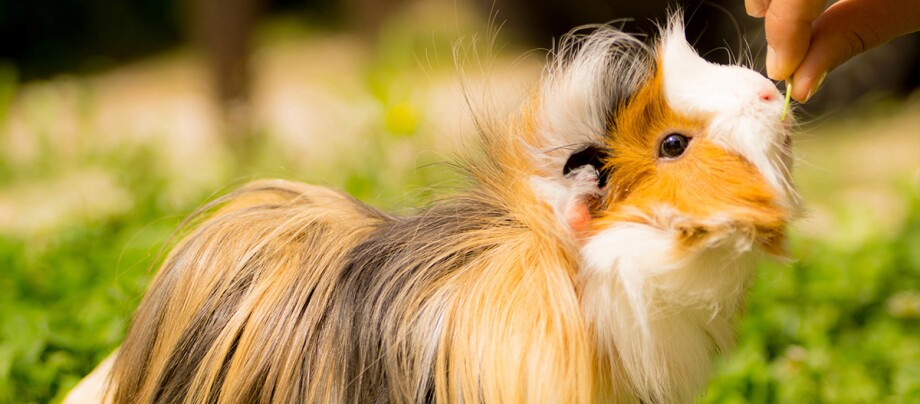
You can also help long-haired guinea pigs by brushing them regularly and removing loose undercoat. A stylish summer haircut can also help keep long-haired animals cool. However, make sure not to cause your pet unnecessary stress during the process, and ideally use blunt-tipped scissors to prevent injury.
Outdoor fun for guinea pigs: enrichment and cooling off in summer for guinea pigs in an outdoor enclosure
We’ve put together a checklist showing you how to protect your guinea pigs from the heat and keep them happy in summer with cool enrichment activities.
Unsere besten Tipps für einen coolen Sommer für Meerschweinchen
- Sorge ganztägig für zugluftfreie Schattenplätze im Gehege.
- Häuschen, Höhlen und Unterschlupfe sorgen für Schatten. Besonders gut geeignet sind Unterschlupfe aus Naturmaterialien wie Weidengeflecht, weil sich hier die Hitze weniger stauen kann.
- Eine meerschweinchensichere Bepflanzung im Gehege bringt Abwechslung, Versteckmöglichkeiten und Schatten ins Gehege.
- Sorge mit mehreren Trinkstellen für eine ausreichende Flüssigkeitsversorgung.
- Füttere im Sommer ausreichend Frischfutter, das ebenfalls zur Flüssigkeitsversorgung beiträgt.
- Halte in der Hitze das Meerschweinchengehege penibel sauber.
- Feuchte, kühle Handtücher, oder mit Handtüchern umwickelte Kühlakkus sorgen für einen Frischekick im Gehege.
- Marmorplatten, Steinfliesen oder Backsteine aus dem Kühlschrank helfen Meerlis beim Abkühlen.
- Regelmäßiges Bürsten oder eine Sommerfrisur kann Langhaarmeerschweinchen die Hitze erträglicher machen.
- Eine Buddelkiste mit gewässertem Sand oder feuchter Erde bringt Spielspaß, Abwechslung und Abkühlung ins Gehege.