How to put together a species-appropriate diet for guinea pigs
23.07.2026 - Reading time: 5 minutes
mtreasure/ iStock / Getty Images Plus via Getty Images
Many pet owners still rely entirely on commercial pet food products to feed their beloved animals. However, a balanced diet for guinea pigs needs to include far more than what typical dry food offers. Hay and vegetables, for instance, are essential components of a guinea pig's diet. Fresh fruit, on the other hand—however tasty and rich in vitamins it may be—is only recommended in moderation due to its high sugar content.
Hay: the most important food for guinea pigs
“Wild” guinea pigs in the South American Andes feed primarily on grasses and herbs. They roam for hours, nibbling on whatever comes within reach of their long incisors. For domesticated guinea pigs, fresh hay replaces these grasses and serves as the foundation of their entire diet.
The hay must always be fresh. Ideally, you should install a hay rack in the cage or enclosure and fill it with a handful of fresh hay several times a day. Simply tossing the hay into the cage is not a good idea, as it will mix with bedding, urine, and droppings. Like many other rodents, guinea pigs have a “stuffing stomach” (or continuous-flow digestive system): this means that stomach contents only move toward the intestines and eventually the exit when new food is pushed in from above. So, when your guinea pigs nibble on hay throughout the day, they aren’t doing it out of gluttony; it is necessary to keep the contents of the stomach and intestines moving. Additionally, hay ensures even tooth wear, as guinea pigs’ teeth grow continuously.
One final note: make sure the hay is neither moldy nor damp; otherwise, it could lead to severe gastrointestinal problems. Remove any uneaten hay daily and replace it with fresh hay.
Fresh grasses as a supplementary food for guinea pigs
Naturally, your guinea pigs will appreciate some variety in their diet. In the summer, you can let them graze on a patch of lawn, nibbling on lush grass and wild herbs like dandelion and field mustard. If your guinea pigs live exclusively indoors, you will need to lend a hand and pick the grass for them.
Keep the following points in mind for a balanced guinea pig diet:
- Do not pick plants directly from the edges of agricultural fields, as they may be contaminated with fertilizers and pesticides.
- Grasses from the roadside are also unsuitable due to pollution.
- In densely built-up areas, most green spaces—no matter how small—are used as dog toilets. It is better to gather plants from large meadows in parks.
- Carefully check the gathered greenery for parasites like ticks. Shake it out thoroughly before giving it to your guinea pig. If you wash it, make sure the greenery is completely dry before feeding.
If there are few or no natural meadows in your area, grow fresh greens on your balcony in a small raised bed or window box, or buy dried herb mixes.
Please note: You can never be entirely certain that microscopic parasite eggs aren’t hiding in the greens. Therefore, it is advisable to have regular fecal examinations performed by a veterinarian—especially if you feed a lot of greens of “unknown origin.”
Do guinea pigs eat celery? Tips for handling vegetables
Alongside hay, vegetables are the second key component of a guinea pig’s diet. However, not all types of vegetables are suitable. At first glance, lettuce might seem like a good food choice; in reality, however, green lettuce leaves contain high levels of nitrate and, unfortunately, too few vitamins. This can lead to diarrhea. Additionally, guinea pigs should only be given spinach, broccoli, and chard very sparingly, as these varieties have a high oxalic acid content.
Recommended options include vitamin-rich vegetables such as fennel, endive, parsnips, rutabagas, Jerusalem artichokes, and celery. Guinea pigs actually love gnawing on long stalks of celery. On warm days, you can offer the animals cool, water-rich pieces of cucumber as a refreshing treat. Carrots are only recommended to a limited extent due to their relatively high calorie content. If your guinea pigs get little exercise—meaning they do not have daily free-roaming time—you should feed them carrots only once or twice a week.
Legumes, alliums (including leeks), and all types of cabbage are strictly off-limits; they cause significant bloating and, in some cases, even diarrhea. Starchy vegetables like potatoes and sweet potatoes are also unsuitable.
Dry food in the guinea pig diet
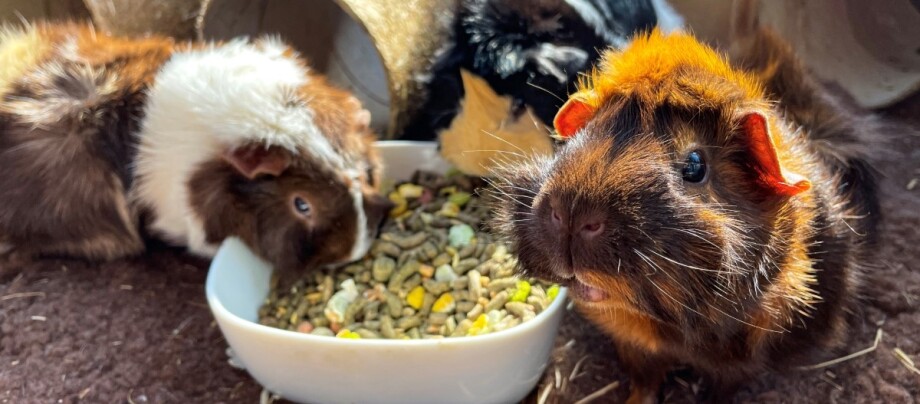
A species-appropriate, natural-style mix is suitable as dry food. Good food is notably low in calcium. Thanks to a naturally high crude fiber content, it promotes tooth abrasion and digestion while ideally supporting the gut flora. Ensure that the ingredients do not include items with excessive sugar and that no preservatives have been added.
Suitable snacks for guinea pigs
Naturally, guinea pigs love sweet treats just as much as their two-legged owners do. And just like us, these rodents can gain weight from too much chocolate or chips. If you want to treat your guinea pigs, offer them snacks only occasionally—as a rule of thumb, no more than twice a week.
A suitable store-bought snack or a fruit tree branch with fresh leaves attached works well. They will devour the green leaves and then enjoy hours of gnawing fun on the branch itself.
Due to its high sugar content, fruit also counts as a snack. It is sufficient to place an apple slice or a strawberry in their enclosure once or twice a week. Stone fruits like cherries and plums are unsuitable because their skins contain hydrogen cyanide, which causes diarrhea. Also, avoid exotic fruits—which the animals’ stomachs are not accustomed to—and rhubarb, which contains high levels of oxalic acid.