Essential equipment for the perfect guinea pig life
23.07.2026 - Reading time: 3 minutes
gollykim / iStock / Getty Images Plus via Getty Images
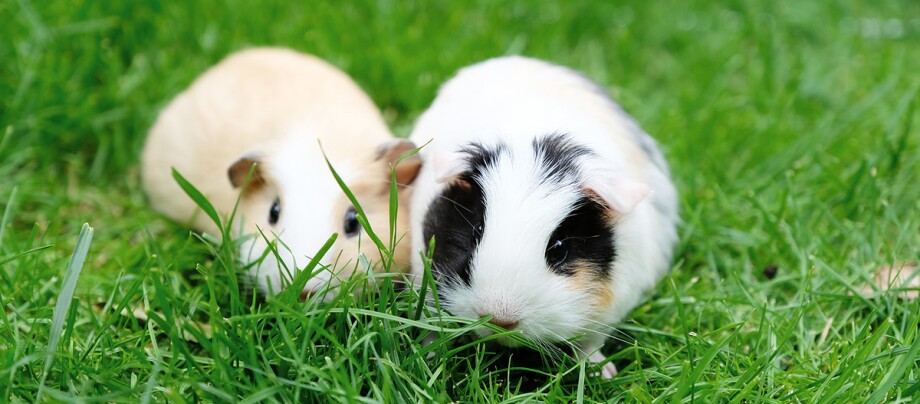
Guinea pigs are playful, sociable animals. In their South American homeland, their wild relatives live in large herds and cover considerable distances. Consequently, these cute rodents can only truly thrive when kept with others of their own kind and given plenty of room to move around.
What your guinea pigs' vocalisations reveal
The ideal herd: Girl Power! A group of four to five animals of similar age ensures guinea pigs feel truly at ease. Groups consisting entirely of neutered males are particularly harmonious. All-female groups generally work well too, though occasional squabbling can occur. A socially well-adjusted, neutered male can usually be added to such a harem without issue—however, multiple males often engage in fierce territorial battles. These rodents have an average life expectancy of six to eight years, though they can live up to twelve years with species-appropriate care. Nutrition plays a crucial role here: as constant grazers, they consume around eighty meals a day, which must be rich in crude fiber and Vitamin C. Read here to find out how to put together the right diet.
How much space do guinea pigs need?
This is what your guinea pig dreams of: freedom of movement and plenty of opportunities for climbing, hiding, and staying active. The need for movement in guinea pigs was long underestimated. Today, it is recommended that a group of five to ten animals have access to an area of at least six square meters. You can achieve this amount of space by incorporating multiple levels. These athletic rodents are excellent climbers that enjoy navigating suspension bridges, ramps, and branches.
In principle, guinea pigs can be kept indoors or outdoors year-round. A combination of both is also possible—though the animals must be gradually acclimatized to temperature changes. Their enclosure should consist of a sheltered retreat—such as a cage (measuring at least 120 x 60 x 50 cm for two to four animals)—and an exercise area that is accessible at all times. Ideally, a floor area of at least 2 m² should be provided for keeping two to four guinea pigs, with an additional 0.5 m² of space added for each extra animal. Equip the retreat area with one shelter per animal—ideally made of wood and featuring at least two exits.
Furthermore, the enclosure should include a hay rack and sufficient food and water bowls (plus a drip-feed water bottle as a backup), while a small-animal litter tray should be placed in the resting zone. For the flooring, spread several layers of bedding: a base layer (pellets), a top layer (hemp), and a cozy/digging layer (straw and hay). A soft surface layer is crucial; their sensitive paws must not come into contact with hard or sharp surfaces, such as straw pellets. To prevent the guinea pig enclosure from turning into a filthy mess, remove soiled bedding and leftover food daily. In the outdoor run, provide species-appropriate enrichment—such as treat balls, suspension bridges, tunnels, or digging boxes—to keep them happy. For outdoor enclosures, ensure protection against predators and the elements.
Note: Guinea pigs are sensitive to heat and always need shaded areas.
Checklist: What else do guinea pigs need?
- Brush
- Transport box
- Chewing sticks
- Gnawing stone
- Nail clippers