Guinea Pig Offspring: What Matters Before, During, and After Birth
22.07.2026 - Reading time: 6 minutes
Farinosa / iStock / Getty Images Plus via Getty Images
Have you acquired a pregnant animal, or are you hoping for offspring from your guinea pig? There are several things to consider regarding pregnancy, birth, and rearing. Here, you can read about the age at which these small animals reach sexual maturity and how long the gestation period lasts. You will also learn useful information about the birth and the period that follows, as well as when the offspring should be separated.
The ideal conditions for guinea pig offspring
Guinea pigs are precocial animals. Unlike altricial animals—such as rabbits—precocial young are able to follow their parents immediately after birth. In addition to having a full coat of fur, their sensory organs and motor skills are fully developed. For this reason, the gestation period for precocial species is comparatively longer.
Female guinea pigs reach sexual maturity at three to four weeks of age, while males do so at three weeks or upon reaching a weight of 250 grams. Pregnancy is not visible until the sixth week; consequently, it is possible to purchase young females that are already pregnant. If you are planning to breed them, please consider the animals’ age at the time of mating to ensure the best conditions for both the mother and the offspring. Females should be at least six months old when mated. However, they should not be older than one year at the time of their first birth, as calcium deposits in the pelvic area can complicate delivery and drastically increase mortality rates.
If there is an interval of more than four months between litters, the pelvis also ossifies and the tendons lose elasticity. Another crucial factor is the guinea pigs’ weight at the time of mating: males must have reached a minimum weight of 500 grams, while females should weigh at least 800 grams but no more than 1,000 grams. Both animals must be in perfect health; guinea pigs that have previously been ill or experienced a stillbirth must not be used for breeding.
For health reasons, please do not subject any guinea pig to more than three litters. Breeding is prohibited when crossing certain breeds due to the so-called “lethal factor.” Dalmatian and Roan guinea pigs must not be mated with each other or with members of their own respective type, as the resulting offspring would not survive. Mating these types with Himalayan or multicolored guinea pigs is also discouraged, as the latter may carry Dalmatian or Roan genetics in their lineage.
Your guinea pig is pregnant – what now?
The estrous cycle of female guinea pigs lasts 13 to 19 days, with a period of receptivity lasting around ten hours; ovulation occurs only after mating between the female and the male—an act that lasts just a few seconds and often goes unnoticed. The gestation period ranges from 62 to 72 days, or approximately ten weeks. From the third or fourth week of pregnancy, you can feel the offspring as small lumps on the mother’s abdomen. By the seventh week, the abdomen begins to distend, coinciding with a growth spurt in the young.
At birth, the pups are fully developed and weigh one-tenth as much as their mother. The mother’s weight increases by up to 50 percent, depending on the size of the litter. If you discover that your guinea pig is pregnant, you should avoid any stress. This includes separating the animal from its group or changing its diet. You can meet the increased need for protein and vitamin C during pregnancy by providing fresh food, such as meadow herbs.
Guinea pig offspring: the birth
The familiar environment of its group contributes to a stress-free birth for your guinea pig. Females show no signs of nest-building behavior; however, since they give birth in a sitting position, one can often observe them “test-sitting” in various spots. Conversely, if a guinea pig lies on its side during the birthing process, this may indicate illness or complications. A few days before the birth, the pubic symphysis opens, and you can feel the ends of the pubic bones. When the gap reaches the width of a finger, birth is imminent. Until labor begins, the female continues to eat and move around within the group as usual.
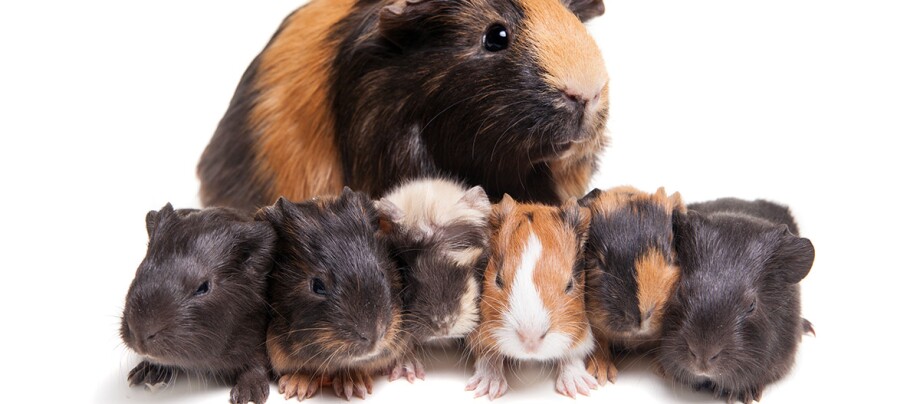
Guinea pig births are usually uncomplicated, taking a few minutes per pup, with an interval of around ten minutes between births. A litter consists of two to three pups on average. They are born head-first, with the mother assisting the process by pulling them out. The other group members withdraw during the birth but often help the mother with rearing and care afterward. After each birth, the female eats the fetal membranes, the placenta, and often the blood-stained bedding. She cleans her offspring, which are usually up on their feet immediately and cuddle up to their siblings.
Guinea pigs: The babies have arrived!
Weigh the young daily—ideally at the same time each day—to monitor their development. During the first three days of life, the little ones may lose up to ten percent of their birth weight, as the mother’s milk production only begins after she has eaten the afterbirth. If the weight loss exceeds this amount, or if you notice significant size differences between the young, supplemental feeding is necessary. Providing plenty of vitamin-rich fresh food ensures the female gets the nutrients she needs for milk production. Special rearing food for the young is not required if they are developing normally. Check the guinea pig and her offspring for injuries after birth; the umbilical cord remnant will dry up and fall off on its own.
Female guinea pigs go into heat again immediately after giving birth. Mating at this early stage is strongly discouraged for health reasons. The young animals’ genitals are clearly visible, allowing you to distinguish between males and females and separate them after four weeks. If you are considering early neutering, it should be performed on the males between the third and fourth week of life, once they weigh between 200 and 250 grams. Female offspring and neutered males should remain with their mother and her group for six to eight weeks. Adhering to this timeframe is important for the development of their social behavior and immune system.